Showing posts sorted by relevance for query blue mountain. Sort by date Show all posts

18 November 2011

Blue Mountain Recreation Area


Last week in Missoula was filled with reasonable temps and lots of sunshine with, so I decided to seize the last nice day of fall and go to Blue Mountain for a day hike. Looking back over the wind, snow, sleet, and rain from the past week, it shows how fast seasons change here in Montana. 


Despite the temperatures in the mid-40s the sunshine really made this hike special - the view across the Missoula Valley was crystal clear. The trails were rather busy due in some part due to Veterans Day, although I think the last chance for a dry sunny day played a big part in the number of Missoulians out and about. Once I trekked further in, the crowds dissipated, bird songs audibly grew in number, and the peacefulness of the forest emerged. 


The few times I tried to catch a family of chirping birds in my view finder, the small birds kept hopping and flying away. I put away my camera and decided to just watch and listen quietly; my mental note is just as vivid in my senses as a photograph in my camera. Once satisfied with watching the fleeting birds, I kept on the path and saw a few folks in bright vests in a field off in the distance. They were working on some sort of explosives project, of which I am not sure, but it did seem strange that in the midst this beautiful public space. Later down the trail a few signs directed me to stay on the path in the marked area as there were unexploded materials in the field. This made me a little uneasy, even though I was not straying from the path, so I changed directions at the next path I found. 


I headed down closer to the river and through a more densely wooded terrain. A crow was calling loudly and it felt as if he were following my path by hopping from tree to tree as I moved forward. Not long after, the crow swooped out of the tree overhead and made a complete circle over my location of the path; I took this as a good omen for my walk. 


Not long after the crow incident, I turned back toward the parking area. The walk lasted for well over an hour, but could have easily continued for longer given time. There are plenty of trails to explore, specimens to examine, and sights to take in. 


To find Blue Mountain, head south from Missoula on Highway 93 towards Hamilton. Not long after crossing the river, there is a light at the intersection of hwy. 93 and Blue Mountain Rd., where you will take a right hand turn. Follow Blue Mountain road for a couple of minutes and after a tight turn left, you will see a parking area straight ahead and slightly to the left. Once you park your car there are many trails to choose from!

To find out more information on the recreation area at Blue Mountain please visit the All Missoula website. 
And, for more information on bird species and field notes from Blue Mountain please visit the Montana Birding and Nature Trail site.


15 March 2010

Mountain Bluebirds

Last week the Master Naturalist Class took an excursion to Waterworks Hill to look (and listen) for birds.  We saw several common Montana species:  American robins, northern flickers, dark-eyed juncos, black-billed magpies, and spotted towhees.  Instructor Brian Williams heard the call of a mountain bluebird and saw it fly away in the distance, but the untrained ears and eyes of the students were too slow to pick up on it.  In lieu of having seen the bird, I decided to do a little research, find a few pictures, and share some bluebird facts here.

We in Western Montana know and love these bright bits of bird blue that come our way in the springtime. Well-named are those perfect, sunny, blue-sky days we call "bluebird days"!

Mountain Bluebirds (Sialia currucoides) are members of the thrush family, and are medium-sized songbirds with a large, round head, chunky body, medium-length tail, and sky-blue feathers.  The males in particular stand out, with the bright blue color covering head, body, wings, and tail.  Females are a duller color, a greyish-blue overall, with pale sky-blue coloring only on their wings, rump, and tail.  In general, it is the males that catch our attention, perhaps because they seem almost impossibly blue.  I always forget how richly blue they are, and am surprised, every year, by their vividness.  

Mountain bluebirds can be found in open areas and grasslands with scattered trees and bushes, such as agricultural areas and prairie-forest habitats.  Their ability to live in open spaces makes them unusual in the thrush family, and helps them increase their population when humans clear land or raise grazing animals.  They eat small fruits and insects, which they catch by hovering above their prey and dropping rapidly down to the ground, or by perching and flycatching insects from mid-air.  


The females lay 4-8 eggs in nests built of grasses lined with soft bark, hair, or feathers, located in cavities in trees or snags, or in human-made nest boxes.  The mountain bluebird's propensity for using nest boxes has made it a fairly easy subject for field research, but has resulted in most of that research being done on nest-box rather than natural mountain bluebird populations.


This bird's summer range extends north-south from Alaska to Arizona and east-west from western Nebraska to California, while in the winter it can be found from Colorado and Nebraska down into central Mexico.  It can be found year-round (though populations differ from summer to winter) from central Oregon to northern Arizona and New Mexico.  In western Montana, we can look for the mountain bluebird to return in early to mid-March.  In other words, now!

When you're out hiking in mountain bluebird habitat, listen for the series of low burry whistles of its song, or the clear, mellow "feeer" or "perf" whistle of its call.  You can listen to both sounds here.  Happy bluebirding!

29 March 2013

Friday Field Notes: Bluebird Days

Lately, it seems as if the sky is blue more often than not. There is nothing quite like waking up to a brisk, bluebird day in the spring in Montana. The growing strength of the sunshine warms the skin and raises hope that summer is not far away. But it isn't just the sun that illuminates the landscape this time of year.

On a recent outing up Missoula's Waterworks Hill, I heard a soft, chattery whistle sound. Initially, I was caught off-guard, but rather quickly it hit me: Mountain Bluebirds. I panned around, searching for the magnificent cerulean birds, and sure enough, there they were perched on a power line right above me. I don't know why I was so surprised to see them; the sweeping grasslands are perfect bluebird habitat that the birds return to every year. Perhaps it was simply the abruptness with which they arrived. The previous day, there were no bluebirds to be found. Now, there were dozens.
A male Mountain Bluebird with his lunch.
Mountain Bluebirds (Sialia currocoides) are a small member of the thrush family, which includes common birds like the American Robbin, Hermit Thrush, Townsend's Solitaire, and other bluebirds. While common throughout Montana and most of the interior West in the spring and summer, Mountain Bluebirds move as far south as Central America to winter. Rather interestingly, Mountain Bluebirds can tolerate colder habitats than other bluebirds, and some migrate westward to the Sierras for the winter. I suppose they must be pretty hearty, as their early return to the Northern Rockies inevitably results in them being forced to weather a handful of spring snowstorms.

Unlike many bird species, Mountain Bluebirds have largely benefited from human settlement and activity in the West. The clearing of previously forested lands and the expansion of agricultural development has opened up millions of acres of new bluebird habitat. They also have been helped by our affinity for them - there must be hundreds of thousands of "bluebird boxes" scattered across the western United States.

A female Mountain Bluebird hovers while searching for insects.
Like most thrushes, Mountain Bluebirds feed primarily on insects, although their diet is supplemented throughout the year with small fruits and seeds. What sets this particular bird apart from its close relatives, however, is the way in which they sometimes acquire their food. Mountain Bluebirds can often be seen hovering in place, not unlike American Kestrels, as they scan the ground for insects. If prey is found, they quickly swoop down to the ground like a raptor pouncing on a small rodent. It is a spectacular sight to behold, made all the wilder and more intense by the bird's stunning colors.

Over the coming days and weeks, more and more of these magnificent birds are sure to arrive. Their presence on Waterworks Hill and other grassy fields across Montana is likely to be accompanied by that of a close rival, the Western Bluebird. As mating season takes off and the struggle to establish a territory reaches fever pitch, Mountain Bluebirds will clash with Westerns as well as members of their own species over nesting boxes and territories. It will be a spectacle, no doubt. I, for one, will be watching eagerly.

Have you seen any bluebirds yet this spring? Do your bluebird boxes have new residents? Be sure to let us know in the comments!

17 October 2011

Garnet Mountain


Garnet Mountain

Last weekend I had the pleasure of meeting my brother in Bozeman for a backpacking adventure! Our destination was the Garnet Mountain Fire Lookout that is just 20 minutes south of Bozeman. The day before our trek a storm had rolled through Gallatin County and dusted the mountain tops with snow. The weather on our hike up was pleasant, in the mid-50s and only semi-cloudy. The breaks from the sun were welcomed and we cheered with cool breezes that graced our hard working bodies. The hike itself is a mere 4 miles - however you gain nearly 3,000 feet over the course of the hike.


We were cautious of bears, toting bells and bear spray, but we did not see any large wildlife during our hike. We spotted lots of Elk tracks in the mud and saw a few chipmunks scurry off the trail into the brush. We ran into snow the last quarter mile that was up to 6 inches deep in some spots. The snow made it much easier to spot animal tracks, such as some Prairie Chicken tracks, Fox tracks, and more Elk tracks.

The last stretch to the top was by far the steepest, and in the snow field a few hundred feet from the fire lookout we spotted a bunch of fox tracks zigzagging and then turned into circles. We laughed at the sight of the pattern of the tracks and wondered what the little fox had been up to, perhaps chasing his tail or more likely following a bunny, whose tracks we also found not far from the fox tracks.

The fire lookout itself was very cozy and offered unparalleled views of the Gallatin Canyon and beyond. The sunset was incredible; bright pinks, golden yellows, and blazing orange contrasted against the deep blue and bounced off scattered clouds. The views from the Lookout were well worth the aches and pains of the hike! Luckily we were not socked in with clouds or fog so we were able to take in the stars and wildly bright moon. Thanks to the snow reflecting so much of the moonlight, we were able to turn off our lantern and sit by the fire to enjoy the endless beauty below us. After inhaling a delicious fajita dinner, we were all more than ready to cozy up in our sleeping bags and call it a night.
We only stayed one night, so after waking up, eating breakfast, and cleaning up the cabin, we headed back down. It was a beautiful fall morning, full of crisp air and chirping birds. Chickadee calls were the most prevalent, however that is the bird call I know the best, so it could have been that my ear was only tuned into the Chickadees. The trek down was difficult, but beautiful and much faster than going uphill. Yet again we didn’t spot any wildlife, outside a few squirrels. This hike and Fire Lookout was amazing and will definitely be something I will do again. If you are looking for a great weekend getaway and a challenge, I would highly recommend Garnet Mountain Fire Lookout! The only thing I would do differently next time is pack along a field guide (I forgot mine at home on the coffee table, doh!)


06 June 2011

Woods Gulch Hike

Now is definitely the time to go seeking out wildflowers!  A hike up Woods Gulch this past weekend awarded views of FIFTY-TWO plant species in full bloom.  Gorgeous!  Here's what you may see if you amble up that lovely little trail anytime soon:
side-flowered mitrewort
twisted stalk
false Solomon's seal (two species)
western trillium
black gooseberry
serviceberry
hawthorne
meadowrue
stream violet
dandelions
shooting stars
ninebark
clematis
stinging nettles
baneberry
arrowleaf balsamroot
desert parsley
blue-eyed Mary
pussytoes
Canada violet
false boxwood
mountain ash
kittentails
stoneseed
miner's lettuce
draba
groundsel
Oregon grape
prairie/woodland stars
kinnikinnick
Rocky Mountain maple
white arabis
purple arabis
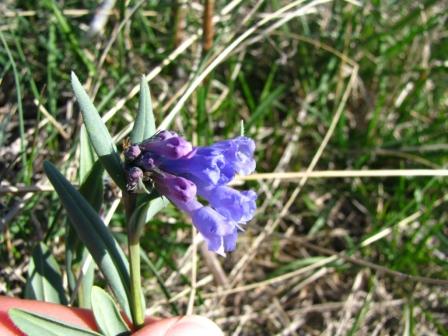
bluebells
heart-leafed arnica
alumroot
wild strawberry
wood strawberry
glacier lilies
early blue violet
sitka valerian
waterleaf
fairybells
paintbrush
huckleberry
shooting stars
9-leaf desert parsley
collomia
lupine
penstemon
larkspur

What are you finding on your outdoor explorations?

05 June 2012

VNS May Field Trips: Solo Hike.

Students on the solo hike get to put their naturalist skills they've learned to practice--all on their own. I heard many students say that they were surprised by how much they enjoyed being alone on a trail. A few times, they insisted they walk back along the solo hike trail in the opposite direction, again all alone.

Some discoveries:

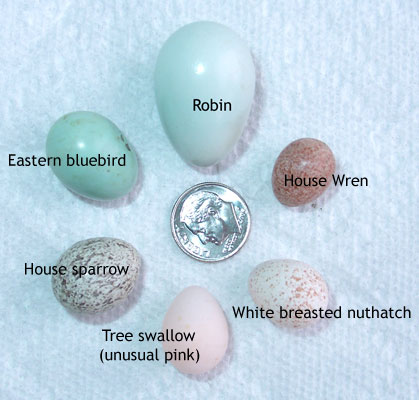
A tiny, blue egg. I found it along the trail at Fort Missoula, and have yet to get a confirmation of what kind of bird it belongs to! Of course, it is most probable that it was a robin's egg--but it was definitely no bigger than a quarter. Could it have belonged to someone else?


 Here's a chart I found of the sizes of eggs (some of which are blue) from someone in Connecticut. An Eastern bluebird egg is the same size, approximately, as a Western or mountain bluebird.

http://www.sialis.org/nests.htm
European Starlings can also have blue eggs. Their eggs are darker and smaller than robins' eggs, a little larger than a bluebird egg, and glossy, but without any spotting. If you want to have a go at IDing the egg we saw, do so in the comments!


 This group of kids at Council Groves enjoyed walking alone, and really loved skipping rocks along the river afterwards. They seemed so enthralled by being alone that I had to run around to gather them back togther to share their discoveries from the solo hike!
 

 At Fort Missoula, kids ate their snacks all crammed into the big log. These girls were all telling each other about things they had seen, and it from a ways off it seemed like the log itself was chattering.


14 June 2010

Waterworks Wonders

Waterworks Hill, Missoula, MT.  A local, easy hike.  I go up there every once in awhile with a friend or out-of-town guests.  In the past week, however, I've walked up the ridge to visit this little spot three different times.  The weeks of rain we've had have been great for the wildflowers, and they are blooming in delightful, chaotic profusion.  I'm not even sure what my favorite ones are:

The bright yellow woolly groundsel (Senecio canus), with its dusty grey-green leaves?


Or the white-pink clusters of buckwheat (Eriogonum ovalifolium)?


Perhaps I like looking up and watching the mountain bluebirds fluttering about, still as miraculously blue as they were earlier this spring?


Or the fragrant, fuzzy yarrow (Achillea millefolium), which is bursting into white blooms?


They're all lovely, and striking in their own unique ways.  But the two that are most beautiful to me--the two that I simply can't decide between--are the fascinating bitterroots (Lewisia rediviva)--Montana's state flower!--


and the impossibly vivid purply-blue penstemon (Penstemon spp). 


Most spectacular of all, however, is the way they all look together.


On Sunday the flowers were still going strong--so you still have time to get out and see them!  Go!  Now!

And enjoy!


23 February 2012

February in the Bitterroot.

Nearly a month ago, Bitterroot Bill (the yellow-bellied marmot, cousin to groundhog Punxsutawney Phil) predicted the imminence of spring--or, more accurately, he didn't show himself at all on the overcast Groundhog Day at the Lee Metcalf National Wildlife Refuge. That may be hard to believe with all the winter storm warnings we have been getting, but we can always hope.
© Sara J. Call 2012
There's quite a bit less snow in the Bitterroot Valley, and quite a bit more sun. I drive out there every so often to get out from under the grey skies that have been frequenting Missoula Valley as of late. Even when the sky is overcast in the Bitterroot, it will open up to let rays of sun burst through, which is always wonderful. Last week, I drove down through Stevensville and took a loop through the Lee Metcalf Refuge to catch those rays of sunlight. There's a surprising amount of bird-watching to be had along the ponds, even now. Before long, I'm sure one will be able to spot a muskrat or two patrolling the thawing waterways.
© Sara J. Call 2012


Briefly, some interesting history about Lee Metcalf National Wildlife Refuge: it was founded in 1963 and renamed to 'Lee Metcalf' in 1978 in honor of the late senator that helped establish conservation projects across the state of Montana. The refuge is a total of 2,800 acres. Natural trails wind through 160 acres of ponds, sloughs, and river bottoms. While it predominately caters to providing habitat for migratory birds, the refuge also contains plenty of other creatures: beavers, muskrats, osprey, and yellow-bellied marmots, to name a few. Fish are also protected residents. The habitat is actively managed, meaning that people control water levels using siphons and pumps; provide weed control using fire, mechanical means, and sometimes cattle; and allow sportsman to come birding during hunting season. All of the management techniques are necessary to help maintain healthy wetlands and riparian areas in the refuge, where the riparian zones are human-enhanced and dependent on periodic drawdowns.


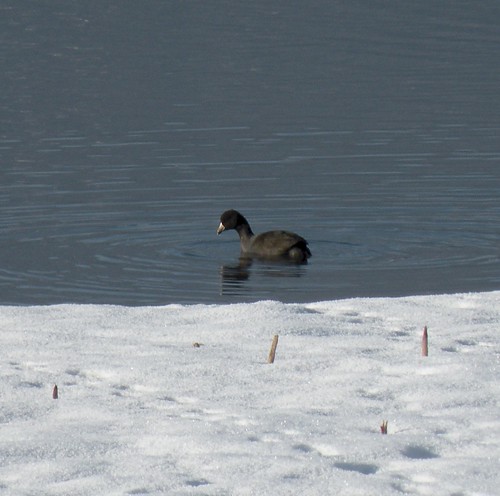
The Bitterroot Range provides a wondrous backdrop to the wetlands. I saw dozens of ducks (mallards and others) and Canada geese, and watched an American coot dabbling near the shoreline, tipping forward and bobbing with tail pointing skyward for a few moments before settling back upright on the water to swallow whatever he had found to eat. 

© Sara J. Call 2012

© USFWS Mountain Prairie


A great blue heron stood reflected in a small pond as the sun set, and the clouds were splashed with an amazing array of pink and purple that we rarely see in Missoula skies. Before I could document the moment in a photo, the heron hunched his lanky frame and lifted away into the dusk, scattering droplets of water like beads.

 In the coming months, the red-winged and yellow-headed blackbirds will return, which is my favorite time of spring. You can definitely bet on good birdwatching at Lee Metcalf NWR, year-round. 


See our spring post on the birds of Lee Metcalf from last year here.

REFERENCES:
"Get Ready For Spring" - NBC Montana, 2 Feb 2012
"Lee Metcalf Refuge Revitalizes Pond with Fire, Cattle" - 4 Nov 2011
Montana Birding Trail - Lee Metcalf NWR
USFWS Lee Metcalf National Wildlife Refuge website
Wikipedia entry